
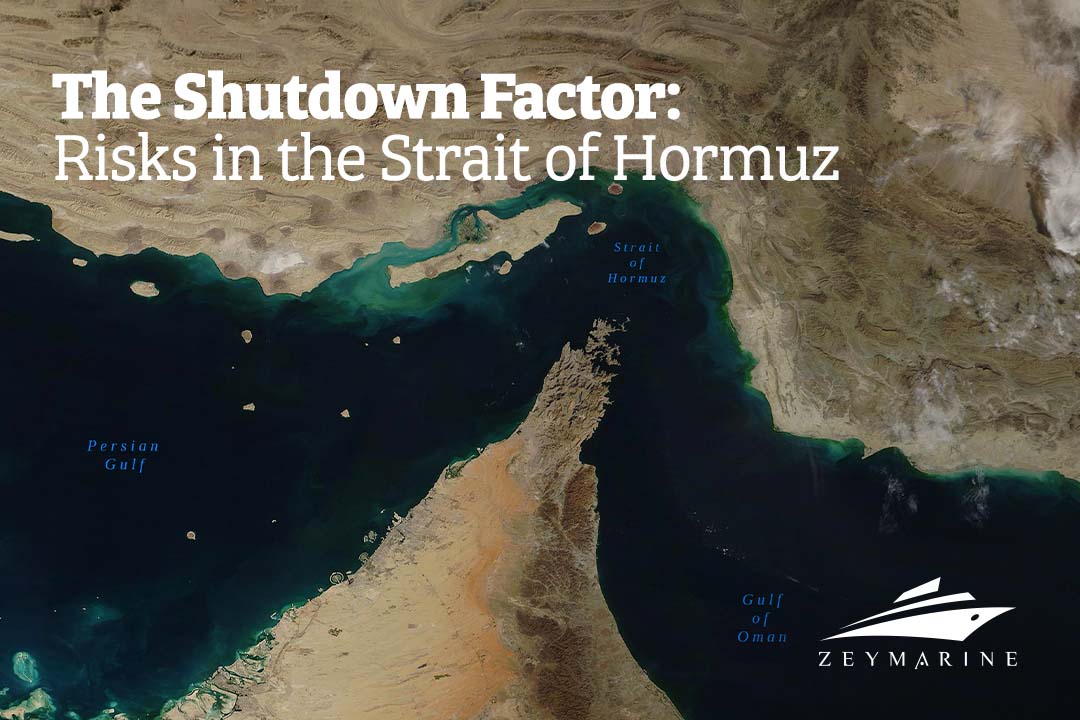
Without doubt, one of the world’s crucial maritime routes is the Strait of Hormuz, a narrow waterway that divides Iran from Oman and the United Arab Emirates. Being the only sea route connecting the Persian Gulf to the open ocean, it is an essential conduit for the world energy market and, as such, has a significant impact on international shipping, freight rates, and oil prices. Understanding the significance of the Strait is crucial for potential vulnerabilities of the global economy, even without taking into account the current political environment.
The Strait and Numbers

At its narrowest point, the Strait of Hormuz is only about 33 kilometers wide, with the shipping lanes in either direction being just 3 kilometers across, separated by a 3-kilometer buffer zone. This confined space, however, facilitates the passage of an astronomical volume of energy resources. According to data from the U.S. Energy Information Administration (EIA) and maritime analytics firms, roughly 20-30% of the world’s total traded liquefied natural gas (LNG) and approximately 20-25% of the global petroleum (oil and refined products) consumed daily passes through this narrow corridor.
This immense volume translates into staggering figures. Statistics indicate that on average, approximately 15 to 20 large crude oil tankers traverse the Strait of Hormuz daily. These are the massive vessels capable of carrying millions of barrels of oil each. Expanding this perspective, it is estimated that over 5,000 ships pass through the strait annually, transporting everything from hydrocarbons to containerized goods, chemicals, and vehicles. While smaller cargo vessels also use the route, the sheer concentration of energy-carrying ships underscores the strait’s specific importance to the global power grid and industrial sectors. (S&P Global Commodity Insights, 2025).
Freight Rates and Oil Prices
In the shipping world, the Strait of Hormuz is the ultimate “Listed Area” as defined by the Joint War Committee (JWC). The moment tensions escalate, “War Risk” premiums are no longer a standard line item; they become a massive variable.
Underwriters typically charge an (Additional Premium) AP for a seven-day breach of the restricted zone. In periods of high friction, these premiums can jump from 0.01% to over 0.5% of the hull and machinery (H&M) value. For a VLCC (Very Large Crude Carrier) valued at $100 million, a single transit could suddenly cost an additional $500,000 in insurance alone. (Marsh McLennan Maritime Risk Report, 2025).
As the list of “willing” ships shrinks, the spot market supply (tonnage balance) tightens instantly. Charterers are then forced to pay a “danger pay” premium on the Worldscale (WS) rates to entice owners into the region. This often triggers a spike in TD3C (Middle East Gulf to China) and other key benchmark routes.
Since the Strait is a primary conduit for the global oil supply, any threat to it causes a spike in Brent crude, which immediately flows through to Bunker Fuel prices (VLSFO/MGO). Even if an owner isn’t trading in the Gulf, their global fuel costs, and thus their breakeven freight rate, will climb.
Potential Effects of Closure
The geopolitical significance of the Strait of Hormuz stems primarily from the potential consequences of its closure. Global oil prices would not just rise; they would likely skyrocket.
The flow of approximately 20 million barrels of oil per day (roughly a fifth of global consumption) would cease. While many developed nations maintain strategic petroleum reserves (SPRs) designed to cushion against short-term disruptions, these are limited. A prolonged closure would exhaust these reserves, leading to actual physical shortages in parts of the world heavily dependent on Persian Gulf oil, such as East Asia and parts of Europe.
The impact would extend far beyond energy. Countless industries rely on the timely delivery of petroleum products for raw materials (petrochemicals for plastics, fertilizers, pharmaceuticals) and transportation fuel. A severe energy shortage would cause factories to shut down, transportation networks to grind to a halt, and general consumer goods to become scarce, leading to widespread economic paralysis.
While there are pipelines designed to bypass the strait (like the Petroline in Saudi Arabia and the Abu Dhabi Crude Oil Pipeline), their capacity is significantly less than the total daily oil flow through Hormuz. Furthermore, these pipelines have their own practical and political limitations. There is no existing infrastructure capable of replacing the sheer volume and flexibility offered by the maritime route through the strait.
Recent Developments & News
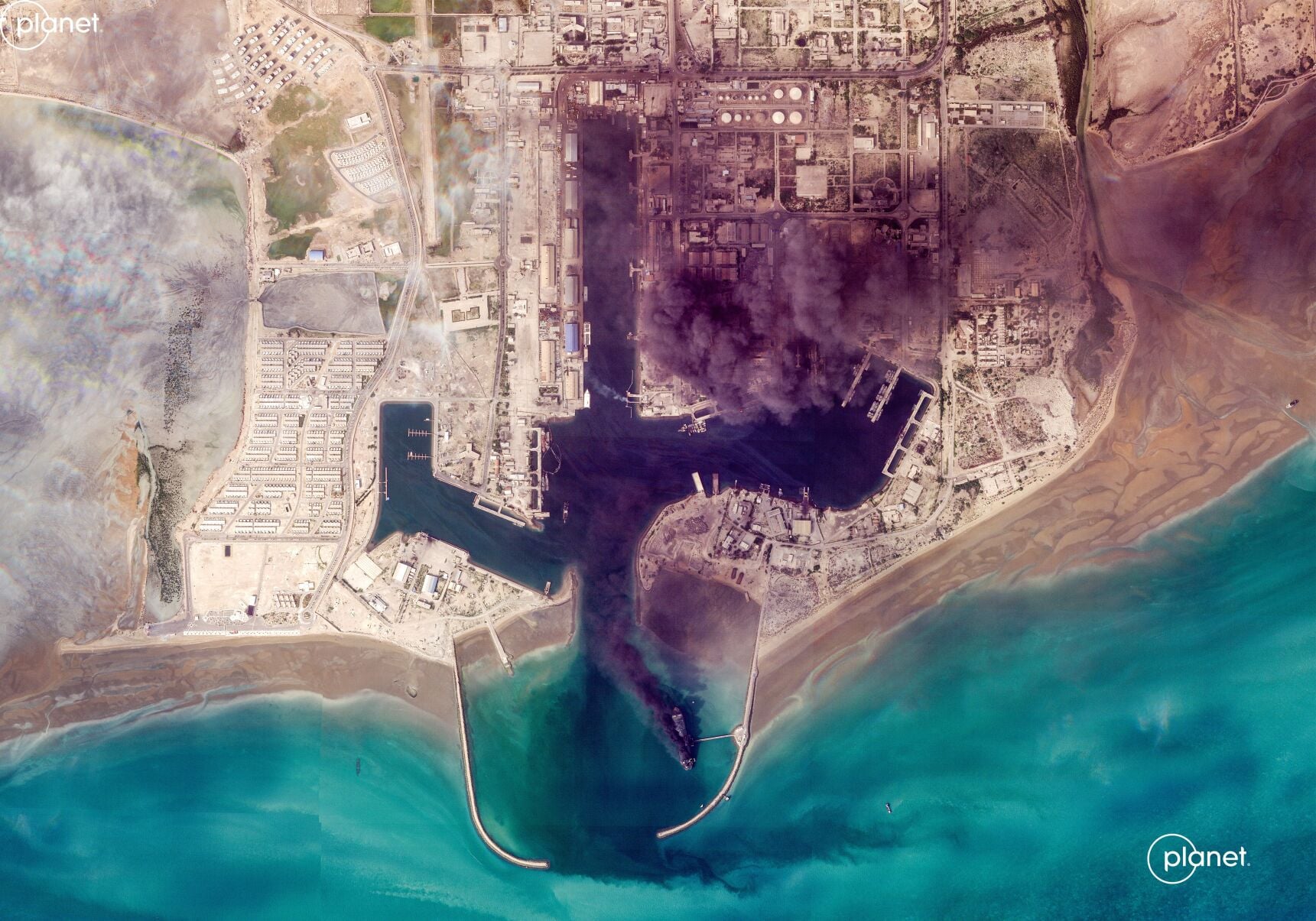
A Greek VLCC has achieved the highest spot rate ever recorded for the segment. Tankers International reported that Minerva Marine’s 317,000-dwt Pantanassa (built 2011) was fixed by South Korean refiner GS Caltex Oil at about $436,000 per day, a level that was almost unimaginable before recent attacks on Iran severely curtailed Middle East oil shipments.
The deal confirms paper rates that analysts have described as “astronomical.” The fixture over 60 days will equate to $26.2m for the voyage. Reuters reported that the ship was fixed to load in the Saudi Arabian Red Sea port of Yanbu at $28m, as exporters tried to divert barrels away from the Strait of Hormuz. The deal beats the $307,000 achieved in 2019 following US sanctions against China Cosco Shipping companies. Greece’s Angelicoussis Group has also bagged the second-biggest deal on record with the 321,000-dwt Maran Thaleia achieving a rate of $300,000 per day.
As disruptions continue due to the closure of the Strait of Hormuz, the Baltic Exchange’s Middle East Gulf to Asia assessment for spot VLCCs reached Worldscale (WS) 465.6, or a staggering $481,200 per day. This is the highest in Worldscale terms since the OPEC oil embargo in 1973.
Fearnley analyst Fredrik Dybwad noted that Saudi Arabia may halt loadings in the Middle East Gulf altogether and only supply tankers from Yanbu. However, while the pipeline to Yanbu has a capacity of 4.5m bpd, it falls short of overall Saudi export volumes of 7.2m bpd. Furthermore, Oslo broker Fearnleys has tallied 10% of the compliant tanker fleet “trapped” inside the Gulf, keeping the market balance extremely tight even as demand faces pressure.
In a further blow to supply, Iraq has reportedly halted oil exports to the port of Ceyhan in Turkey as a precautionary measure, shutting in approximately 200,000 bpd. Meanwhile, data from Allied QuantumSea indicated that Iranian crude loadings had accelerated to over 3m bpd just days before the heightened military activity, suggesting a precautionary export push by Tehran prior to the current maritime disruption.
(Source: TradeWinds / Reuters / Tankers International, 2026)