
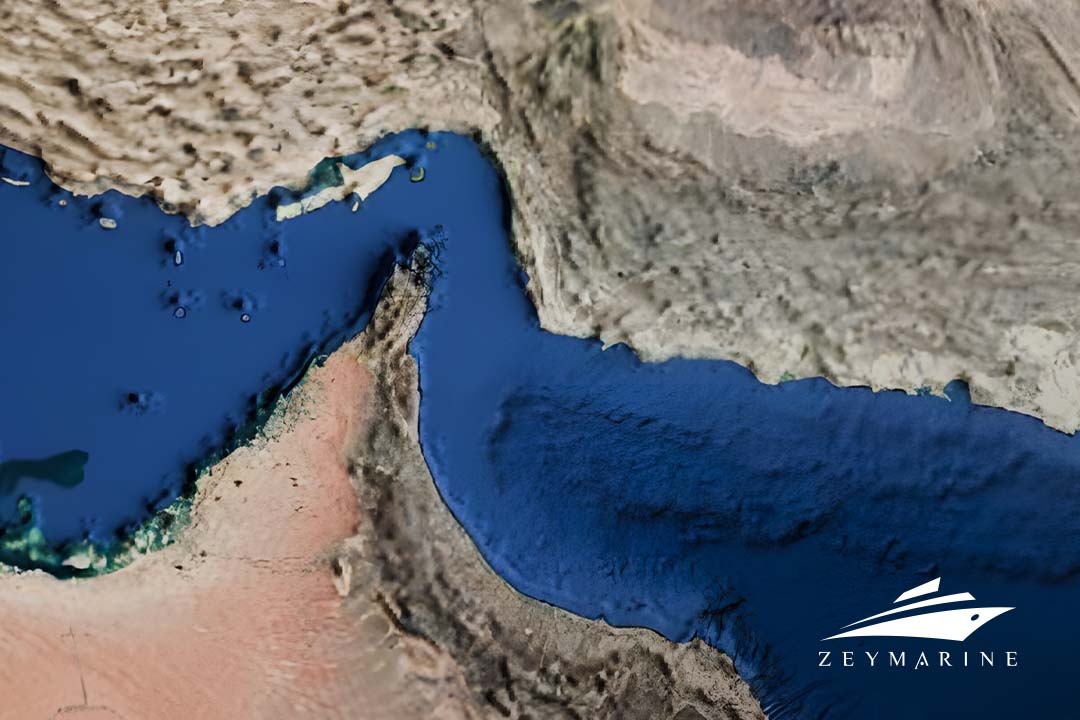
The maritime industry has long understood that the Strait of Hormuz is more than just a geographic chokepoint; it is the physical heartbeat of global energy trade. As of early May 2026, that heartbeat is experiencing profound instability.
Following the significant escalation of hostilities in late February, the shipping world has had to adapt with unprecedented speed to a “new normal” of restricted passage, soaring operational costs, and a fundamental shift in regional logistics.
Timeline of Events
The origins of the current crisis date back to 28 February 2026, when military attacks in the region led to a rapid deterioration in maritime security. In the aftermath, the Islamic Republic of Iran issued warnings that no commercial vessels would be permitted to pass through the Strait of Hormuz.
By mid-March, tanker traffic, which typically carries 20 million barrels of crude oil daily and accounts for 20 per cent of global Liquefied Natural Gas (LNG) volumes, had fallen by an estimated 80 to 90 per cent. As of 6 May 2026, the situation continues as a ‘double blockade’. Although a temporary ceasefire in mid-April briefly raised hopes that the strait would reopen, disputes over maritime access led to the reimposition of restrictions. Still, many vessels are anchored outside the strait, awaiting instructions for safe passage or a change of route.
Impact on Maritime Operations
The crisis has not only slowed physical transit but has also reshaped the economic landscape of shipping.
The Surge in Operational Costs: Fuel prices have experienced a “Hormuz Shock.” With Brent crude peaking near $120 per barrel in March and stabilizing around $110 as of 6 May 2026, bunker fuel surcharges have become a heavy burden.
Rerouting and Logistics: Many vessels are now bypassing the Middle East entirely, opting for the Cape of Good Hope. This adds approximately 10 to 20 days to transit times, creating port congestion in alternative hubs.
Seafarer Welfare: Perhaps the most critical impact is the human one. The UN’s International Maritime Organization (IMO) estimates that thousands of seafarers have been caught in the crossfire or stranded on vessels in high-risk zones. At Zeymarine, we emphasize that crew safety must remain the industry’s top priority.
Potential Scenarios
As we look toward the second half of 2026, the maritime world faces several possible futures. While the situation is fluid, analysts generally point toward three potential outcomes of the current tensions:
Stabilization via International Oversight
In this scenario, the implementation of maritime protection measures contributes to a reduction in direct interference with commercial vessels. The focus shifts toward establishing a “Maritime Corridor” to facilitate the passage of essential cargo, such as food, medicine, and energy products. While insurance premiums may remain elevated due to ongoing security concerns, a partial reopening of the route could support a gradual stabilization of global supply chains and reduce the risk of broader economic disruption.
Prolonged Asymmetric Conflict
If diplomatic efforts stall, we may see a continuation of warfare. This would involve intermittent closures, the use of drone swarms, and cyber-attacks on port infrastructure. In this future, the Strait of Hormuz becomes a permanent “High-Risk Zone.” The maritime industry would respond by permanently diversifying away from the Gulf, investing heavily in land-based pipelines and alternative ports on the East Coast of the UAE and Oman.
De-escalation and Re-opening
The most optimistic path involves a comprehensive diplomatic resolution involving all regional stakeholders. A return to the status quo ante would see the removal of mines, the lifting of all blockades, and a gradual reduction in insurance premiums. However, even in this scenario, the “Hormuz Risk” will likely remain baked into future maritime contracts, as the 2026 crisis has proven just how quickly a critical chokepoint can be compromised.
Peace Above All
In times of global tension, we are reminded that our industry thrives best in a world of cooperation rather than conflict. For Zeymarine, advocating for stability is not just a business preference, it is a core value. We believe that the ultimate solution to the Hormuz crisis lies not in the escalation of force, but in the restoration of international dialogue.